

Best overall for warmth without a bulky outer layer: the US Army ECWCS Level 3 fleece. Best winter outer: the Swedish M59 winter parka. Best for wet weather: the British Army Soldier 2000 DPM MVP waterproof jacket. This 2026 guide ranks army surplus jackets by the warmth and weight trade-off each type offers, without pretending that an unverified garment weight is a measured result.
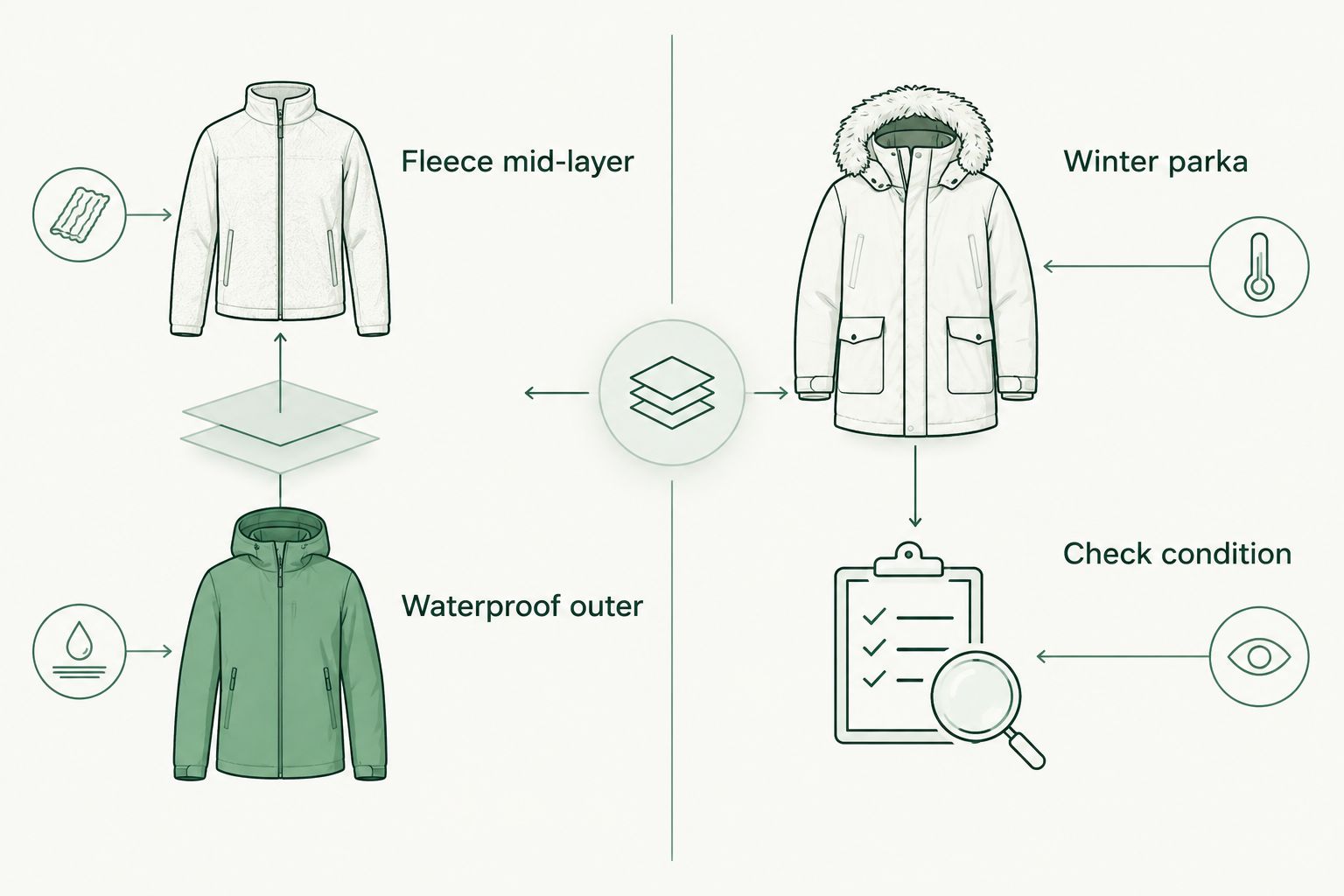
- For army surplus jackets warmth without bulk, choose the US Army ECWCS Level 3 fleece as a mid-layer.
- Choose the Swedish M59 winter parka when winter coverage matters more than packability.
- Choose the British Army Soldier 2000 DPM MVP jacket for rain protection, not stand-alone insulation.
- Military Mart lists genuine surplus; check each garment's stated grade, size and condition before buying.
Why warmth and weight need separate answers
A jacket that blocks rain is not necessarily a warm jacket. A fleece holds warmth but needs an outer layer when wind and rain pick up. If you buy by the word winter or waterproof alone, you can end up carrying the wrong kit.
This 2026 ranking compares what each garment is for, not laboratory insulation scores. The supplied listings do not give comparable garment weights, warmth ratings or packed sizes. That makes a numbered warmth-per-gram league table impossible. The useful decision is whether you need insulation, weather protection or an outer layer you can wear through changing conditions.
Authenticity matters too. Military Mart sells genuine ex-military kit and grades surplus for condition; a jacket's name alone does not tell you how the particular garment has worn. The distinction between issue kit and a lookalike is covered in how to identify genuine military surplus from replicas. Check the listing's grade before you compare one jacket with another.
What makes the best army surplus jacket for warmth?
Use these criteria before reading the ranking. Weight here means the practical burden of wearing or carrying a layer, not a claimed figure in grams. No like-for-like measured weights are supplied for these jackets.
- Insulation role: A fleece is a warming layer. A waterproof shell mainly keeps rain out. Do not score both as though they perform the same job.
- Weather protection: Decide whether your main problem is cold, wind or rain. A warm mid-layer does not replace a waterproof outer.
- Layering room: Check the listed size against what you will wear underneath. A close-fitting outer can leave no room for the layer that supplies the warmth.
- Condition and grade: Look for wear at cuffs, closures and high-contact areas. Read the stated grade rather than assuming every used jacket is alike.
- Carry burden: If a jacket will spend time in your bag, consider its bulk as well as how it feels when worn. The listings here do not support a numeric weight comparison.
Army surplus jackets at a glance
| Jacket | Best for | Warmth and weight role | Key limitation |
|---|---|---|---|
| US Army ECWCS Level 3 fleece | Warmth under an outer | Dedicated fleece mid-layer | Not a rain shell |
| Swedish M59 winter parka | A winter outer layer | Winter-focused parka | No verified garment weight or warmth rating supplied |
| British Army Soldier 2000 DPM waterproof jacket | Wet-weather layering | Waterproof outer shell | Needs a separate warming layer |
| US Army ECWCS Level 5 softshell | Active use in cool conditions | Breathable cold-weather outer | Not the waterproof pick here |
| US Army woodland M65 field jacket | Everyday field-jacket wear | Field-jacket outer | Insulation and condition need checking on the listing |
1. US Army ECWCS Level 3 fleece: best for warmth under an outer
Best for: Someone who wants a dedicated warming layer beneath weather protection. The listed Genuine US Army ECWCS Fleece Cold Weather Jacket is Grade A, official US military issue and made from Polartec high-loft fleece. Its clearest role in this ranking is insulation, not rain protection.
That makes it the best overall answer to army surplus jackets warmth when you can choose your outer layer separately. Wear the fleece when you need warmth; add a shell when conditions demand one. In 2026, that is a more useful choice than expecting a single field jacket to cover every cold, wet day.
US Army ECWCS Level 3 fleece pros:
- The listing identifies a cold-weather fleece rather than an unlined shell.
- Grade A gives you a stated condition category to check against the listing.
- It fits a layered setup: insulation underneath, weather protection outside.
US Army ECWCS Level 3 fleece cons:
- It is not the waterproof layer in this comparison.
- No comparable garment weight or warmth rating is supplied.
- It adds another garment to carry when you also need a shell.
Verdict: Buy if warmth is the missing part of your existing wet-weather kit. Hold if you need one outer jacket primarily for rain.
2. Swedish M59 winter parka: best for a winter outer layer
Best for: Someone choosing a winter-focused outer rather than a separate fleece and shell as their starting point. The Military Mart catalogue identifies this as a Swedish M59 winter parka and the URL identifies a used listing. Treat winter parka as its intended role, not proof of a particular insulation rating.
This is the pick when coverage matters more to you than an unverified claim about low weight. Compare its listed condition and size with the layers you expect to wear. Without a measured weight or a detailed construction specification in the supplied information, it cannot honestly beat the fleece on warmth per gram.
Swedish M59 winter parka pros:
- Its winter-parka designation makes the intended use clear.
- It gives you an outer-layer alternative to a fleece-led setup.
- A used listing makes condition checking part of the buying decision, not an afterthought.
Swedish M59 winter parka cons:
- No verified warmth rating is supplied.
- No verified garment weight is supplied.
- The supplied information does not establish its waterproof performance.
Verdict: Hold until the size, condition and construction details on the current listing fit your intended use. Do not buy it on the assumption that winter means waterproof.
3. British Army Soldier 2000 DPM jacket: best for wet-weather layering
Best for: Someone who already has an insulating layer and needs a waterproof outer. Military Mart's listed product describes a genuine British Army Soldier 2000 woodland DPM MVP jacket as waterproof and breathable, with a Grade A+ Like New condition grade. That tells you much more about its job than the camouflage pattern does.
The warmth comes from what you put underneath. In 2026, choose this jacket over the fleece only when keeping rain out is the first requirement. If you expect to stand still in the cold, plan the insulating layer as a separate decision rather than treating the shell as a winter coat.
British Army Soldier 2000 DPM jacket pros:
- The supplied product description identifies it as a waterproof, breathable outer.
- Grade A+ Like New states the listed condition.
- It can sit over a warming layer when sizing allows.
British Army Soldier 2000 DPM jacket cons:
- A waterproof shell is not a substitute for insulation.
- The supplied information does not give a comparable garment weight.
- You must check sizing with your intended mid-layer, not just a shirt.
Verdict: Buy for wet-weather protection if you have room underneath for the insulation you need. Skip it as your only answer to cold.
4. US Army ECWCS Level 5 softshell: best for active use in cool conditions
Best for: Someone moving outdoors who wants a breathable cold-weather jacket rather than a dedicated fleece or waterproof shell. The listed Genuine US Army ECWCS Level 5 Softshell Cold Weather Jacket is Grade A official US military issue. Its description identifies breathability; it does not supply a comparable warmth rating or garment weight.
This sits between the specialist choices above. It is an outer jacket for a different job from the Level 3 fleece, which is the insulation pick, and the British Army Soldier 2000 DPM jacket, which is the rain pick. Choose by the conditions you will actually face, not by the higher level number.
US Army ECWCS Level 5 softshell pros:
- The listing identifies a breathable cold-weather softshell.
- Grade A gives you a stated condition category.
- It suits a buyer who wants an outer layer for active use.
US Army ECWCS Level 5 softshell cons:
- The supplied listing does not establish it as the waterproof choice.
- A softshell designation does not provide a verified warmth rating.
- There is no measured weight here to compare with the fleece or parka.
Verdict: Buy for active, cool-weather use when breathability is the deciding factor. Hold if your priority is sustained rain protection.
5. US Army woodland M65 field jacket: best for everyday field-jacket wear
Best for: Someone who wants a genuine field-jacket style for regular wear and will assess warmth through layering. The Military Mart target listing identifies a genuine US Army woodland M65 field jacket. The supplied information does not establish whether that particular listing includes a liner, so do not build your cold-weather plan around one.
An M65 earns its place here because it serves a different buyer from the specialist fleece, shell and softshell. It is the everyday field-jacket choice, not the proven lightest or warmest jacket in the table. Check the current listing for size, grade and what is included before deciding what to wear beneath it.
US Army woodland M65 field jacket pros:
- The target listing identifies it as a genuine US Army field jacket.
- It gives you an everyday alternative to specialist weather layers.
- You can judge the need for additional insulation as a separate purchase decision.
US Army woodland M65 field jacket cons:
- Liner inclusion is not established in the supplied information.
- No comparable weight or warmth rating is supplied.
- Its woodland pattern will not suit every buyer's intended use.
Verdict: Hold until you have checked the exact garment's size, condition and liner details. Skip it if you need a verified waterproof outer.
Which layers belong in a cold-weather setup?
Start with the condition that will end your day first. If it is rain, choose a waterproof outer and decide what warming layer fits beneath it. If it is cold while you are moving, start with insulation and adjust the outer to the weather. If you are buying for ordinary wear, the field jacket or winter parka asks a different question: can you confirm the exact garment's condition and fit?
A jacket choice should also match the activity. A cold walk, a wild camp and a motorcycle journey do not call for the same protective clothing. Do not treat surplus outerwear as motorcycle safety kit: winter motorcycle hoodies address riding clothing, while this ranking assesses surplus jackets by warmth and weather role. Keep warmth separate from any protection requirements of the activity.
For a layered setup, put the warming garment where it can do its job and give the outer enough room to sit over it. Then inspect the closures and wear points described in the listing. Used surplus varies by garment; a grade helps you narrow the choice, but it does not replace reading the individual product details.


How these jackets were ranked
This 2026 order follows the criteria above: first identify the garment's stated role, then weigh weather protection, layering and listed condition. It is a decision order, not a test result or a ranking by measured grams. The Level 3 fleece comes first because it directly answers the warmth question; the winter parka offers an outer-layer route; the waterproof jacket solves a different, wet-weather problem.
No supplied listing gives a consistent set of garment weights and insulation measurements across all five picks. That is why the table names each jacket's trade-off instead of assigning invented scores. Before buying used kit, confirm the individual listing's grade and size. A different grade or an absent liner can change which jacket makes sense for you.
Which army surplus jacket should you choose?
Choose the US Army ECWCS Level 3 fleece by default if warmth without committing to a bulky outer is your main aim. Add a suitable outer when the weather calls for one. Choose the British Army Soldier 2000 DPM jacket instead when rain protection is the immediate gap in your kit.
Choose the Swedish M59 winter parka only after checking the current used garment's details. Choose the Level 5 softshell for active use in cool conditions, or the woodland M65 when everyday field-jacket wear matters more than a documented weather specification. That is the practical 2026 verdict: buy for the layer's job, then check the grade.
FAQ
Which army surplus jacket is best for warmth without bulk?
The US Army ECWCS Level 3 fleece is the best choice here for warmth as a mid-layer. No comparable garment weights are supplied, so this is a role-based verdict, not a measured warmth-to-weight claim.
Is a waterproof army jacket warm on its own?
The British Army Soldier 2000 DPM waterproof jacket is a rain layer, not the insulation pick in this ranking. Wear a suitable warming layer underneath when cold is the main concern.
Is the Swedish M59 winter parka waterproof?
Waterproof performance is not established by the supplied Swedish M59 winter parka listing. Check the current product details rather than assuming a winter designation also means waterproof.
What is the difference between ECWCS Level 3 and Level 5?
The listed ECWCS Level 3 jacket is a high-loft fleece mid-layer, while the listed Level 5 jacket is a breathable cold-weather softshell. Choose the fleece for the warming-layer role and the softshell for its outer-layer role.
Does a US Army M65 field jacket include a liner?
Liner inclusion is not established for the woodland M65 target listing. Check the individual jacket's description and what is included before buying it for cold-weather use.
What should I check when buying a used surplus jacket?
Check the stated grade, garment size and condition details first. Then confirm that the jacket's insulation or weather-protection role matches the kit you already own.
Can I rank these army surplus jackets by weight in 2026?
No verified, comparable garment weights are supplied for all five jackets. This 2026 ranking compares their stated roles and buying trade-offs without assigning unsupported weights.
One last thing
The waterproof jacket and the fleece are not rivals: they solve different problems. If your current coat keeps rain out but leaves you cold, replace the missing warming layer first. If your warm layer gets soaked, fix the outer layer first. That simple check prevents you from buying another jacket that repeats the job your kit already does.


Leave a comment